
STUDIO GUIDE
Studio phone KPIs: seven numbers every portrait studio should track
The phone and enquiry numbers that matter most for a portrait studio are: answer rate, missed call call-back time, first reply time, enquiry to booking rate, show rate, new enquiries by source, and call outcomes. Each takes a few minutes a week to check from your call report and booking records. Track the trend, not a benchmark: your own numbers getting better is what counts. Below is how to calculate each one, a labelled worked example, and what to change when a number slips.
By the Allio team. Updated 22 October 2026.

Why track phone numbers at all
Most studios know their sales but not what happens before them. Enquiries slip through when calls go unanswered, replies wait until tomorrow, or a booked client forgets the session. These seven numbers show where that happens, so you fix the right thing. You don’t need software to start: a weekly note in a spreadsheet works.
1. Answer rate
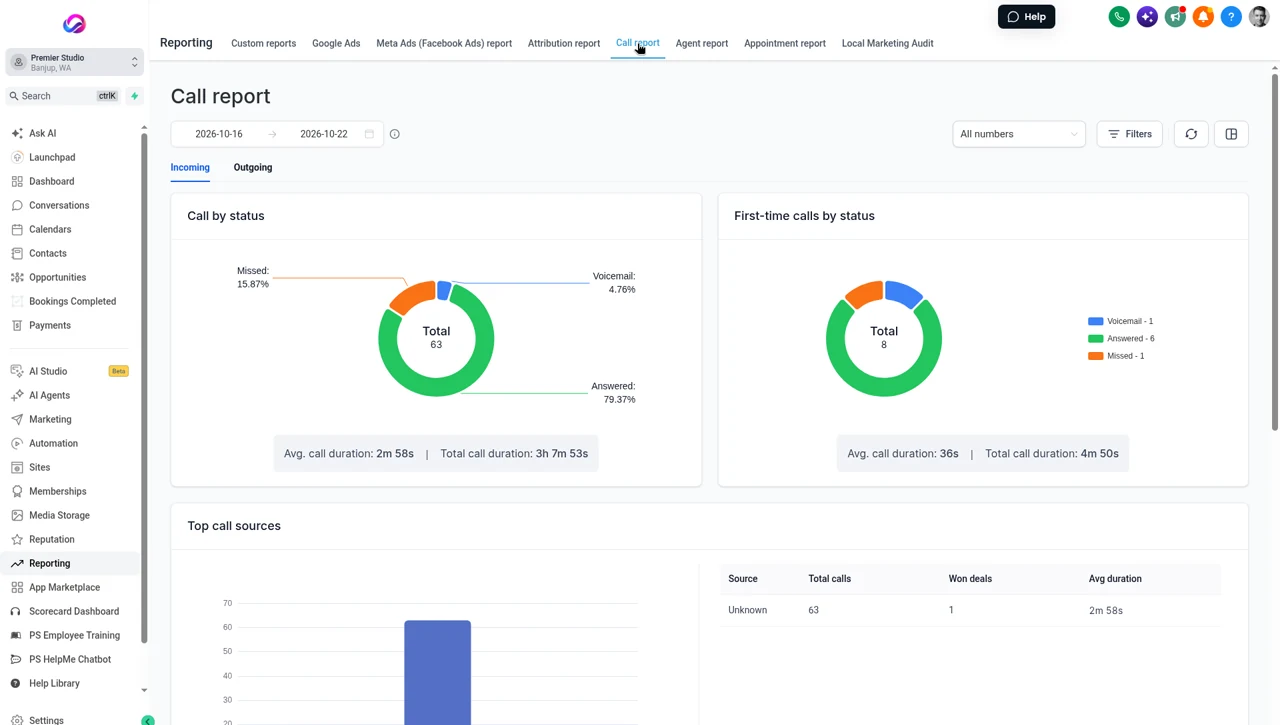
What it is: calls answered by a person, divided by all incoming calls.
Worked example. The numbers are made up to show the method. Use your own.
120 incoming calls in a month, 84 answered: 84 / 120 = 70% answer rate.
If it slips: look at when calls are missed. Ring more than one person, plan cover for sessions and set phone hours. See what missed calls cost.
2. Call back time for missed calls
What it is: how long a missed caller waits before you call or text them back. Check the median, or simply the share called back the same day.
Worked example. The numbers are made up to show the method. Use your own.
Of 36 missed calls from new numbers, 27 were called back the same day: 27 / 36 = 75%.
If it slips: send an automatic text back, create a call back task for each missed call and clear them between sessions.
3. First reply time
What it is: the time from a new enquiry (text, DM, form or email) to your first useful reply. This is your speed to lead.
Worked example. The numbers are made up to show the method. Use your own.
Check ten new enquiries from last week. Seven got a reply within an hour, two the same evening and one the next day.
If it slips: use saved replies, bring all channels into one inbox, and cover evenings with an auto-reply or AI.
4. Enquiry to booking rate
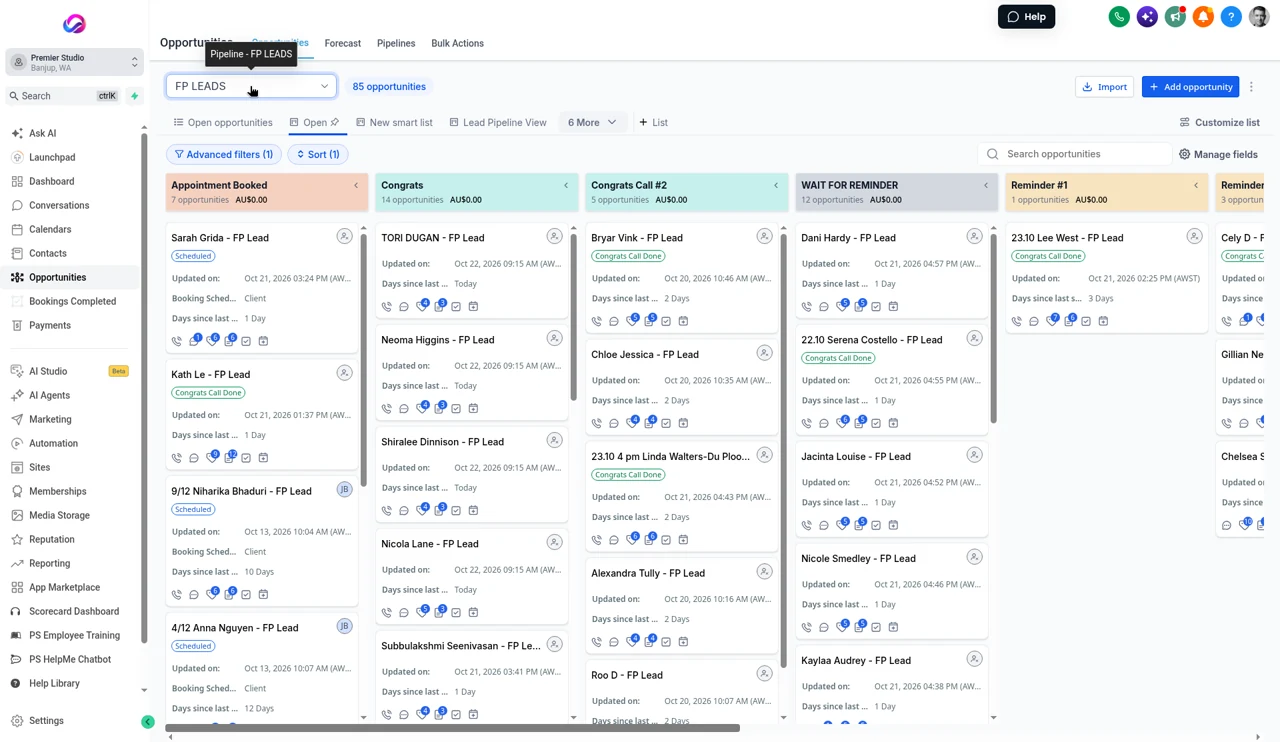
What it is: new enquiries that became booked sessions, divided by all new enquiries in the period.
Worked example. The numbers are made up to show the method. Use your own.
60 new enquiries in a month, 18 booked: 18 / 60 = 30%.
If it slips: look at replies. Are prices clear, is there a next step, do you follow up? See inquiry reply templates.
5. Show rate
What it is: sessions that went ahead as planned, divided by sessions booked for that period. Rescheduled sessions can be counted separately.
Worked example. The numbers are made up to show the method. Use your own.
40 sessions booked for October. 36 went ahead, 3 were rescheduled and 1 was a no-show: 36 / 40 = 90%.
If it slips: send reminders a few days and a day before, ask clients to confirm, take a deposit and make rescheduling easy.
6. New enquiries by source
What it is: where new enquiries come from: Google, Instagram, referrals, partners, past clients. Count them, then count which ones booked.
Worked example. The numbers are made up to show the method. Use your own.
Of 18 bookings, 7 came from Google, 6 from referrals, 3 from Instagram and 2 from past clients.
Why it matters: it shows where to spend your time. See how to get photography clients.
7. Call outcomes
What it is: what happened on each call with a new enquiry: booked, sent information, call back needed, not a fit. Many studios track this with a quick note or tag after each call.
Worked example. The numbers are made up to show the method. Use your own.
Of 25 calls with new enquiries, 9 booked on the call, 10 were sent information, 4 needed a call back and 2 weren’t a fit.
Why it matters: a lot of “sent information” and few bookings suggests a follow-up gap.
A weekly scorecard you can copy
| Number | This week | Last week | Note |
|---|---|---|---|
| Answer rate | |||
| Missed calls called back same day | |||
| First reply within an hour | |||
| Enquiry to booking rate | |||
| Show rate | |||
| New enquiries by source | |||
| Call outcomes |
Fill it in at the same time each week. Pick one number to improve each month, rather than all seven at once.
From numbers to action: an example month
Worked example. The numbers are made up to show the method. Use your own.
Answer rate dropped from 75% to 62%. The call report shows most missed calls were on Saturdays between 9 and 12, when the owner is shooting. The studio adds a second phone to the ring group on Saturday mornings and switches on missed call text back. A month later, Saturday answer rate is back up, and the call back list is shorter.
One clear number, one cause, one change, then measure again. That’s the whole method.
Give each number an owner
In a small studio, one person can own all seven. In a larger one, split them: whoever runs the front desk owns answer rate and call backs, whoever handles enquiries owns first reply time and booking rate, and whoever manages the calendar owns show rate. Owners check their numbers weekly and bring one idea to improve them.
What about benchmarks?
You’ll find plenty of “good” answer rates and booking rates online, but they rarely come from portrait studios and are often from vendors. Your own trend is a better guide. A studio that moves its answer rate from 60% to 80% has made real progress, whatever anyone else’s number is.
Get the numbers without the spreadsheet
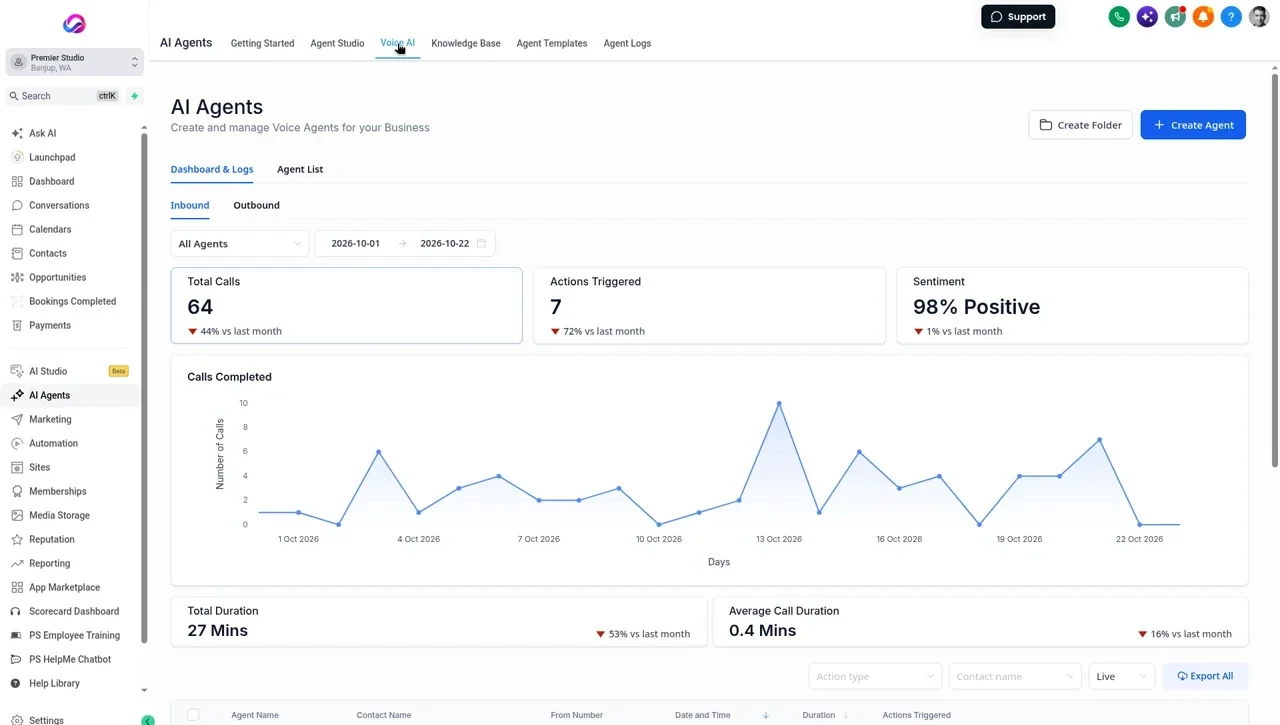
A call report gives you answered, missed and voicemail calls and call times. A pipeline shows enquiries by stage. Your calendar shows booked, held and rescheduled sessions. If an AI answers some calls, its dashboard shows how many it handled and what it did.
Where Allio fits: Allio’s call reporting shows answered, missed and voicemail calls by day and source, on the studio phone system, alongside your pipeline and calendar.
Phone KPI questions
What are the most important phone KPIs for a photography studio?
Answer rate, call back time for missed calls, first reply time, enquiry to booking rate and show rate, plus new enquiries by source and call outcomes.
How do I calculate answer rate?
Calls answered by a person divided by all incoming calls in the same period.
What is a good answer rate for a studio?
There’s no reliable benchmark for portrait studios. Track your own rate weekly and aim to improve it.
What is show rate?
Sessions that went ahead as planned divided by sessions booked for the period. Reminders, confirmations and deposits help keep it high.
How often should I check these numbers?
Weekly is enough for most studios. Pick one number to improve each month.
Do I need special software to track phone KPIs?
No. A weekly note in a spreadsheet works. A call report, a pipeline and a calendar make it faster, because the numbers are already counted for you.
See every call, missed and answered, in one report.
The trial is seven days, card required, and you can be in within minutes.
Want the story first? Read who built Allio and why, or see what a call about Allio covers.
$297 per month. Card required. AI and phone usage is billed at cost, on top of the $297.