
STUDIO GUIDE
How to reduce photography no-shows and late cancellations
Most no-shows come from forgetting, confusion about time or place, or a client who meant to reschedule and didn’t get round to it. To reduce them: confirm every booking in writing straight away, take a fair deposit, send reminders at set times with the key details, ask clients to confirm, make rescheduling easy, and follow up kindly when someone doesn’t arrive. Track your show rate so you know whether it’s working. Below are the timings, message templates and policies, all as fictional examples to adapt.
By the Allio team. Updated 22 October 2026.

Why clients miss sessions
- They forgot. The session was booked weeks ago.
- They were unsure of the details: the time, the location, what to bring.
- Something changed, such as an illness or a clash, and rescheduling felt awkward.
- They didn’t feel committed, often because nothing was paid.
Each cause has a simple fix, so a few small changes usually make a real difference.
Step 1: confirm the booking in writing
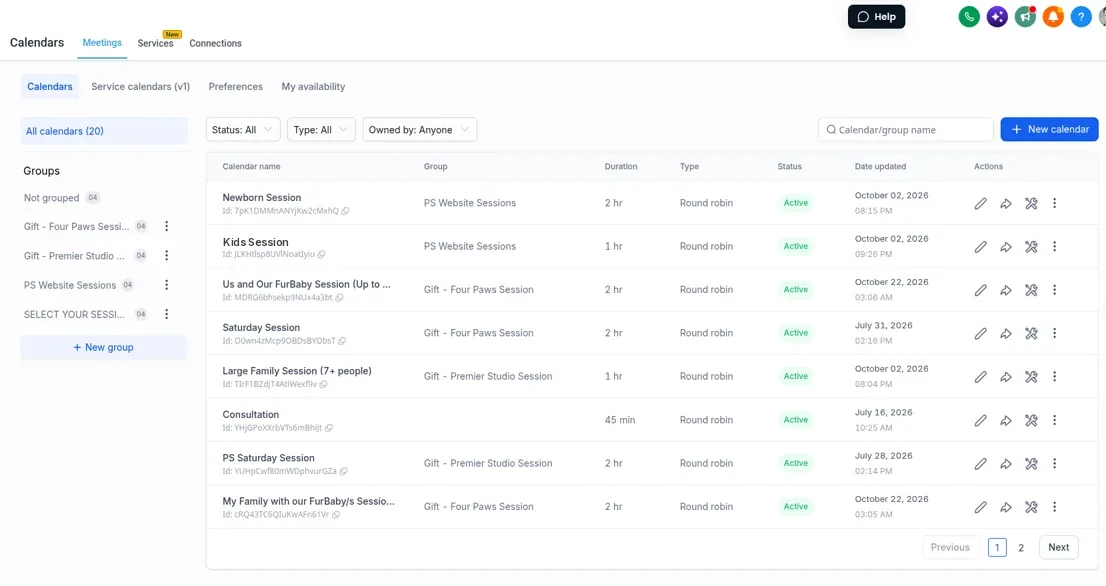
Send a confirmation the moment they book, by text and email, with everything in one place:
Fictional example. The names, dates and studio are made up. Replace the [brackets] with your own details.
“You’re booked! Family session at Fernhill Portrait Studio, Saturday 7 November at 9:20am, at [address]. Parking is [details]. Our what to wear guide is here: [link]. Reply here if anything changes. Ellie”
Step 2: take a fair deposit
A deposit turns a maybe into a booking. Keep it proportionate, explain it before they pay, and say what happens if they need to reschedule. See deposits and retainers.
Step 3: send reminders at set times
A simple sequence many studios use:
- One week before: details, what to wear, and a link to the questionnaire if it’s not done
- Two days before: time, place, parking, and a request to confirm
- The morning of (for afternoon sessions) or the evening before: a short, friendly nudge
Fictional example. The names, dates and studio are made up. Replace the [brackets] with your own details.
Two days before: “Hi Sarah, looking forward to Saturday! Your family session is at 9:20am at [location]. Could you reply YES to confirm, or let me know if you need to change anything? Ellie”
Texts are read quickly, so use them for the short reminders, and email for the longer guide. In the US, business texting needs carrier verification first: see texting verification for studios.
Step 4: ask for a confirmation, and act on silence
A reply of “YES” tells you they’ve seen it. If someone hasn’t confirmed by the day before, call them. A quick call often uncovers a problem, such as a sick child, early enough to reschedule and offer the slot to someone else.
Some studios use an AI assistant to make these confirmation calls. In the US, the FCC ruled in February 2024 that AI generated voices count as an “artificial or prerecorded voice” under the TCPA, so these calls need the client’s prior express consent, and prior express written consent if the call markets anything. Keep the call to the booking, say at the start which studio is calling and that it’s an AI assistant, and hand over to a person when asked. Australia and other countries have their own rules. This is general information, not legal advice: check the rules where you and your clients are.
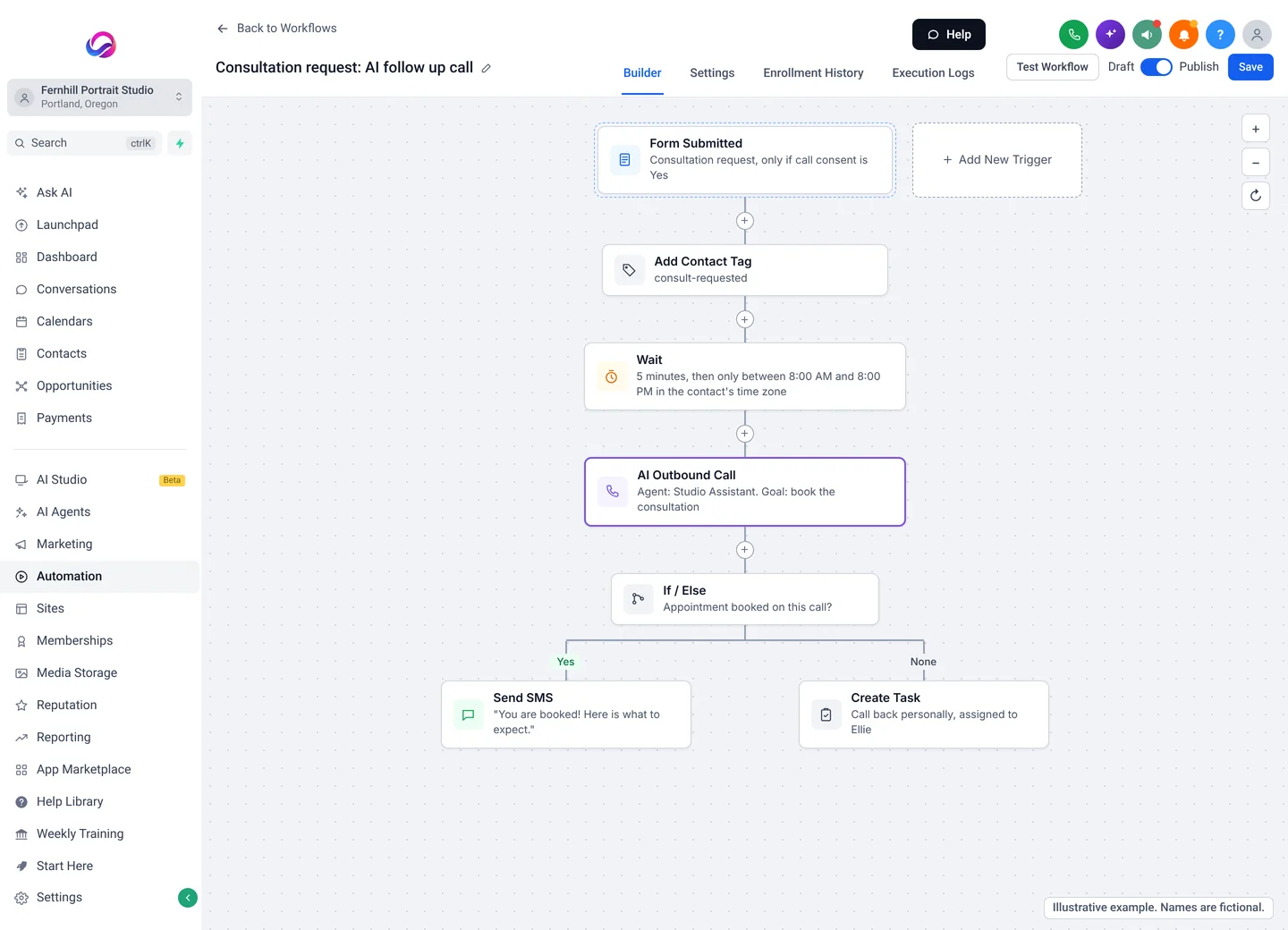
Where Allio fits: Allio can send booking confirmations and reminders automatically, and AI outbound calls can ring clients who have consented to an AI call to confirm, then text a confirmation or flag a change for your team. In the US, texting needs carrier verification first, which can take a few weeks.
Step 5: make rescheduling easy
Clients who find it awkward to reschedule sometimes just don’t turn up. Put “Reply here if anything changes” in every reminder, offer a reschedule link, and respond warmly. A moved session is far better than an empty slot.
- Sick child or pet: reschedule, no fuss
- Bad weather for outdoor sessions: say who decides, and when
- Newborns: build in the flexibility of an early or late arrival
Write a clear rescheduling and no-show policy
Sample policy. Not legal advice: have it checked for where you work.
“Life happens! If you need to move your session, let us know at least [number] days before and we’ll move your booking fee to a new date. If you don’t arrive and haven’t let us know, [what happens to the booking fee]. If a child or pet is unwell, just tell us and we’ll reschedule with no fee.”
Put it in your booking terms, the confirmation and the two day reminder, so nobody is surprised.
Step 6: when someone doesn’t arrive
- Wait 10 to 15 minutes, then call and text once.
- Assume the best: they may be stuck or unwell.
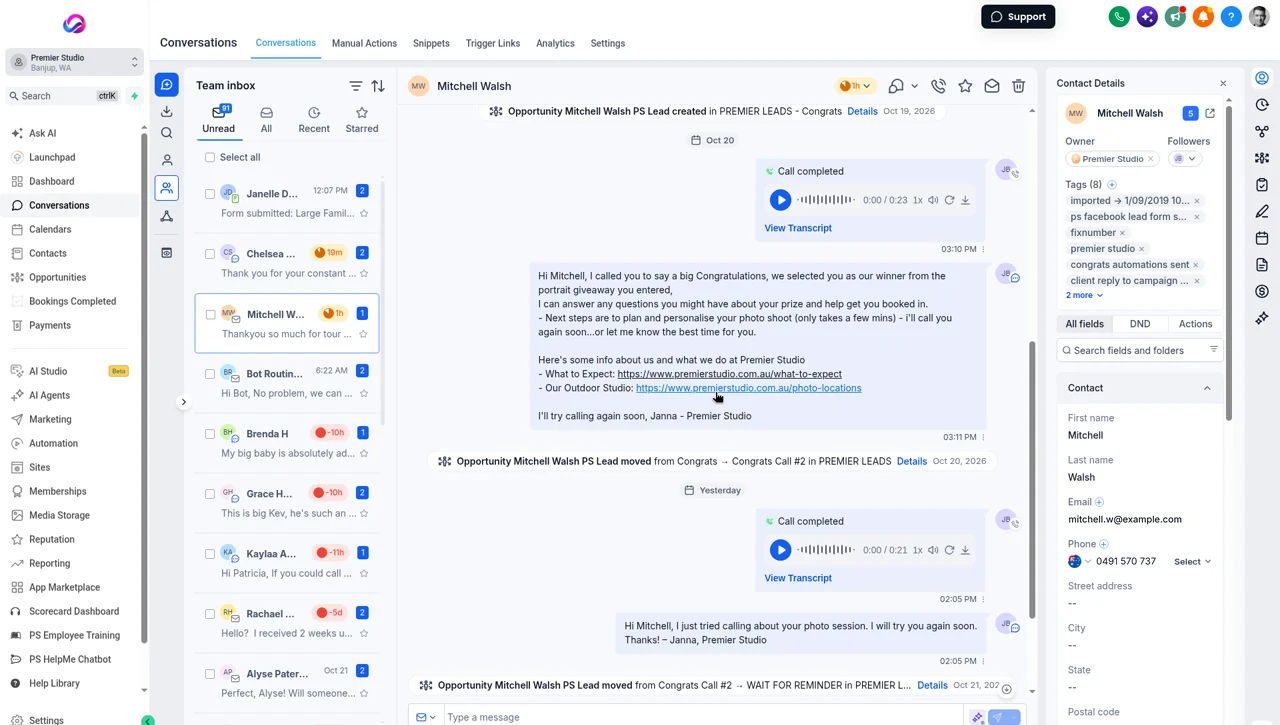
- Later that day, send a kind message offering a new date, and explain your policy.
Fictional example. The names, dates and studio are made up. Replace the [brackets] with your own details.
“Hi Tom, we missed you this morning and hope everything’s okay. If you’d like to rebook, I have [day] at [time] or [day] at [time]. As mentioned in our booking terms, [what happens to the booking fee]. Ellie”
Step 7: track your show rate
Show rate is sessions that went ahead divided by sessions booked. Track no-shows and late reschedules separately, by session type and day of the week.
Worked example. The numbers are made up to show the method. Use your own.
In October, 40 sessions were booked. 36 went ahead, 3 were rescheduled a day or two before, and 1 was a no-show. Show rate: 36 / 40 = 90%.
See studio phone KPIs for the other numbers worth tracking.
Mini sessions need extra care
Mini session days are tightly packed, so one no-show costs a slot you can’t easily refill. Take full payment at booking, send a reminder the day before with the exact time slot and arrival window, and keep a short waitlist so you can offer cancelled slots. See photography mini sessions.
A checklist you can copy
- [ ] Confirmation sent at booking, by text and email
- [ ] Deposit taken and policy explained
- [ ] Reminder one week before, with guide and questionnaire
- [ ] Reminder two days before, asking to confirm
- [ ] Call anyone who hasn’t confirmed by the day before
- [ ] Short reminder the evening before or that morning
- [ ] Waitlist ready for cancelled slots
- [ ] No-show follow-up message ready
Make the first reminder useful, not just a reminder
Clients pay more attention to messages that help them. Pair the one week reminder with something they want: the what to wear guide, a parking map, or tips for keeping toddlers happy on the day. A helpful message gets read, and a read message means the date is remembered.
No-show questions
How do I reduce no-shows for photography sessions?
Confirm in writing, take a fair deposit, send reminders a week before, two days before and the evening before or that morning, ask clients to confirm, make rescheduling easy and call anyone who hasn’t confirmed.
When should I send a session reminder?
A common sequence is one week before, two days before with a request to confirm, and a short nudge the evening before or the morning of.
Should I charge for no-shows?
That depends on your booking terms and local law. Many studios keep some or all of a fair deposit when a client doesn’t attend without notice. Explain the policy before they book.
Can AI make reminder calls?
Yes, with the right consent. In the US, AI voices count as an artificial voice under the TCPA, so you need the client’s prior express consent to the call, and prior express written consent if it markets anything. The AI should say which studio is calling and that it’s an AI assistant, and hand over to a person when asked. Not legal advice: check the rules where you work.
What is a good show rate?
There’s no reliable benchmark for portrait studios. Track your own show rate monthly and aim to improve it.
Should I double book to cover no-shows?
Generally no. It risks two families arriving at once. A short waitlist and quick confirmation calls are a kinder way to fill gaps.
What should I do with a slot when someone cancels late?
Offer it to your waitlist straight away by text, starting with past clients. Even a short-notice booking is better than an empty slot.
Keep every session on the calendar.
The trial is seven days, card required, and you can be in within minutes.
Want the story first? Read who built Allio and why, or see what a call about Allio covers.
$297 per month. Card required. AI and phone usage is billed at cost, on top of the $297.